


Recent posts
Don't miss the latest trends
Claude Opus 5 full review : I ran the benchmarks
HANDS-ON REVIEW · 26 JULY 2026 Claude Opus 5 Anthropic’s fourth model in two months arrived with a pitch that sounds modest: near-frontier intelligence at half the price. The pitch undersells it. One score in this release moved twenty-fold, on the one benchmark specifically designed to resist the tricks labs use to inflate numbers. This…
CDLC : The Context Development LifeCycle
The bottleneck moved Coding agents write features now. They fix bugs, scaffold services, and open pull requests that a reviewer can plausibly approve. Whether that is a good development is a separate argument, and a real one. It is also not the argument most teams are having on a Tuesday morning. The question in front…
GPT-5.6: OpenAI Ships a Family, Not a Model
On July 9, OpenAI moved the GPT-5.6 family to general availability, two weeks after a limited preview. There is no single “GPT-5.6.” There are three: Sol, Terra, and Luna. If you write code for a living, this release is worth ten minutes of your attention, and a bit of skepticism. Why it matters The headline…
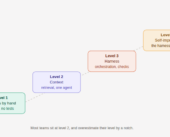
Where to invest: a maturity model for your team
A 5-part series — Part 5/5 The most common mistake isn’t picking the wrong discipline. It’s investing in a layer above where your team actually sits. People want to build a sophisticated harness when they don’t even have a test bench for their prompts. They stack autonomous agents on foundations that are taking on water.…
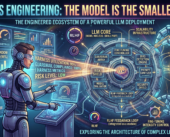
Harness engineering: the model is the smallest part
A 5-part series — Part 4/5 – Harness engineering When the Claude Code source leaked in late March 2026, people could finally measure something practitioners had suspected without proof: across roughly 512,000 lines of TypeScript, the model interaction itself is a tiny fraction. Everything else, the vast majority, is the harness. That sums up the…
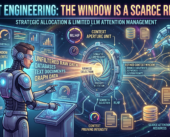
Context engineering: the window is a scarce resource
A 5-part series — Part 3/5 Here’s the most counterintuitive idea in the whole series: giving a model more information can make it worse. It’s tempting to picture the context window as a big bag where you cram everything that might help. In practice it’s a budget. Every token you add spends another, and past…
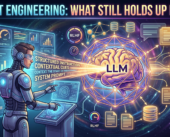
Prompt engineering: what still holds up in 2026
A 5-part series — Part 2/5 We buried prompt engineering a little too fast. The discipline isn’t dead, it’s been demoted. It now sits at the innermost layer of the diagram from Part 1: how you phrase a request, inside a single call. That’s small. It’s also the first place everything can go wrong. In…
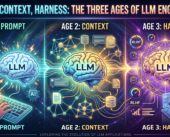
Prompt, context, harness: the three ages of LLM engineering
A 5-part series — Part 1/5 Three years ago, knowing how to “talk” to a model was a rare and slightly magical skill. People traded screenshots of prompts that worked and passed around phrasings like cooking recipes. Andrej Karpathy summed up the era in a line that stuck: the hottest new programming language was English.…
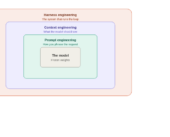
Prompt, Context, Harness : les trois âges de l’ingénierie des LLM
Série en 5 épisodes — Épisode 1/5 Il y a trois ans, savoir « parler » à un modèle était une compétence rare et un peu magique. On s’échangeait des captures d’écran de prompts qui marchaient, on se refilait des tournures comme des recettes de cuisine. Andrej Karpathy a résumé l’époque d’une formule devenue culte…

Claude Fable 5 : Le premier modèle « Au-dessus d’Opus » que vous pouvez réellement utiliser aujourd’hui
Anthropic a lancé Claude Fable 5 hier, et je veux être prudent sur la façon dont j’en parle, car la ferveur marketing entourant les lancements de modèles est désormais fixée en permanence sur « cela change tout ». La plupart du temps, ce n’est pas le cas. Celui-ci a plus de chances d’avoir une réelle…
Content publishing cooperation with my partners