

Don't miss the latest trends
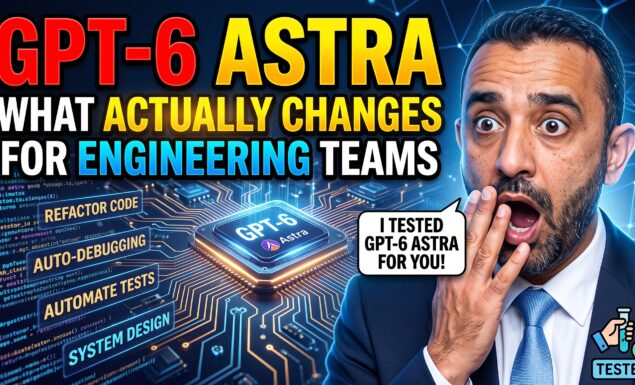
OpenAI shipped GPT-6 Astra on 3 September 2026, four weeks after saying it had slowed the release over cyber risk. Greg Brockman told reporters he personally believes the company has reached AGI. That framing will dominate the discourse for about a fortnight and then evaporate. Underneath it there is a real release with real consequences…
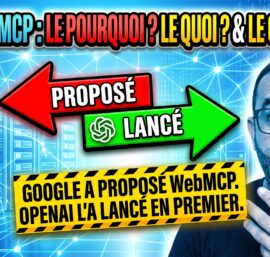
Google a proposé WebMCP. OpenAI l’a livré en premier. WebMCP permet à une page web de tendre à un agent une fonction plutôt qu’un bouton. Un site enregistre des tools nommés, en JavaScript ou en HTML, chacun avec une description et un JSON Schema en entrée, et un agent qui tourne dans le navigateur peut…
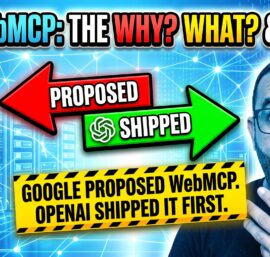
Google proposed WebMCP. OpenAI shipped it first. WebMCP is a way for a web page to hand an agent a function instead of a button. A site registers named tools in JavaScript or in HTML, each with a description and a JSON Schema for its inputs, and an agent running inside the browser can list…

Mon fichier AGENTS.md faisait 340 lignes. Je sais très bien comment j’en suis arrivé là. L’agent faisait quelque chose qui ne me plaisait pas, j’ajoutais une règle, et j’ai répété l’opération pendant des mois. Personne n’a jamais rien supprimé, et deux des règles se contredisaient. Ce fichier entre dans chaque session, avant le premier token…
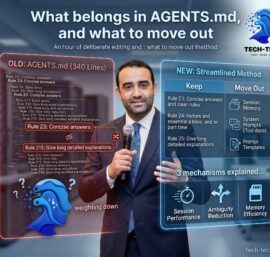
My AGENTS.md was 340 lines. I know exactly how it got there. The agent did something I didn’t like, I added a rule, and I repeated that for a few months. Nobody ever deleted anything, and two of the rules contradicted each other. That file goes into every session, before the first token of actual…

Claude watermarks everything it writes now. Read the limitations page first. On 2 August 2026 the transparency obligations of the EU AI Act became applicable. Anthropic signed the European Commission’s Code of Practice on Transparency of AI-Generated Content and switched on machine-readable marking across every Claude surface, worldwide, not only in the EU. The news…

Claude marque désormais tout ce qu’il écrit. Commencez par lire la page des limites. https://open.spotify.com/episode/216grjJJpDolenwEQ7mwol?si=2L9MfDNKS5Gb_Bg98T4Z1w Le 2 août 2026, les obligations de transparence de l’AI Act européen sont entrées en application. Anthropic a signé le Code of Practice de la Commission sur la transparence des contenus générés par IA, et a activé le marquage lisible…

Comment un petit modèle apprend à faire un travail aussi bien qu’un grand, ce que cela coûte, et quand c’est une mauvaise idée. Guide conceptuel et opérationnel. Dernière revue : août 2026. Ce que couvre cet article La distillation est la technique derrière la plupart des petits modèles qui dépassent leur catégorie, et derrière une…
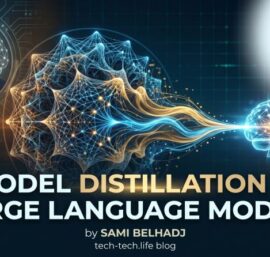
How a small model learns to do one job as well as a large one, what it costs, and when it is the wrong idea. Conceptual and procedural guide. Last reviewed August 2026. What this covers Distillation is the technique behind most small models that punch above their weight, and behind a large share of…
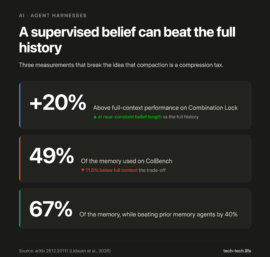
Three days ago I argued that the fix for long-context failure is to send the model less. That was right, and it was incomplete. It tells you to shrink the context. It does not tell you what to keep. The default answer to that second question has been recursive summarization. Every few turns, compress the…
